
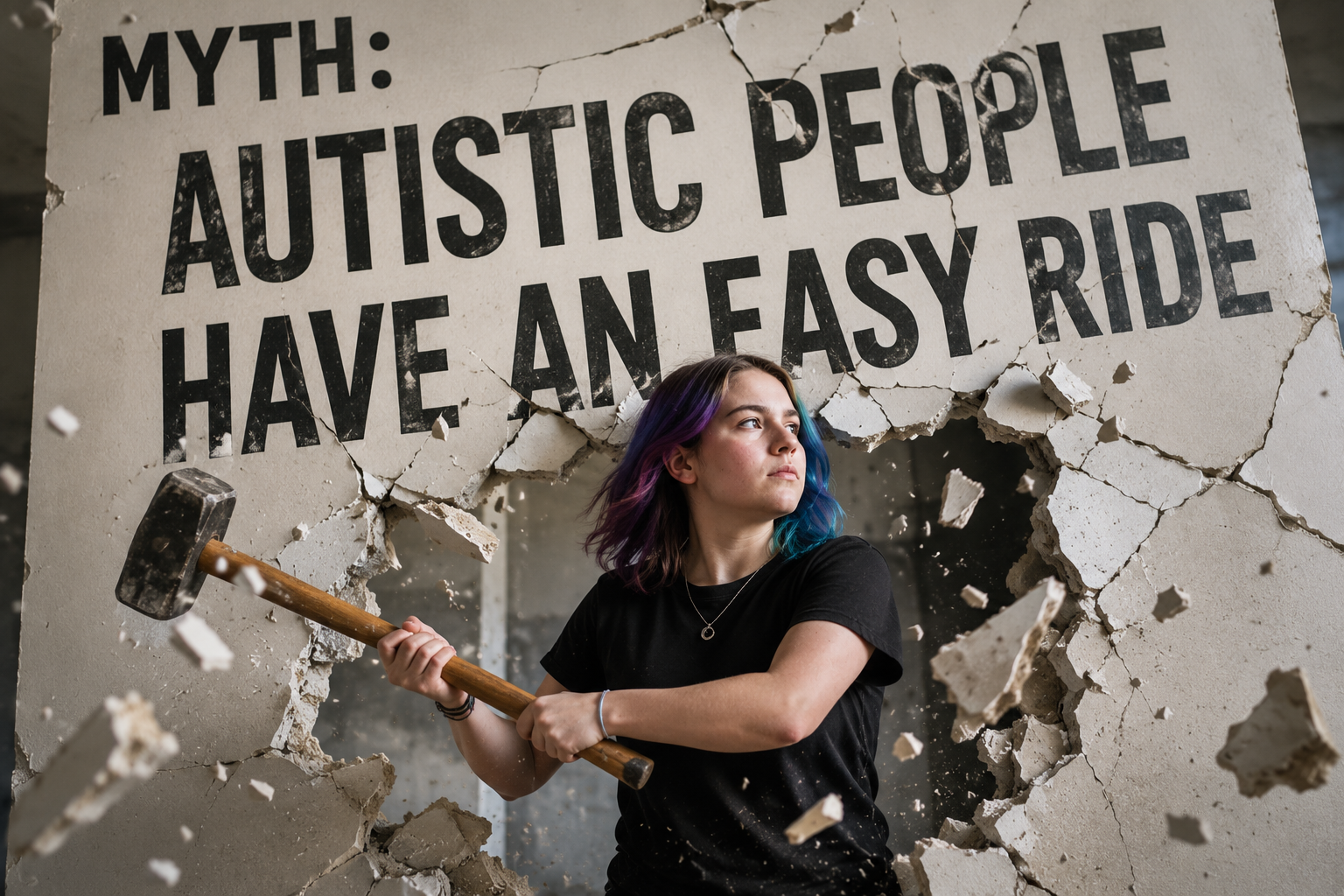
Do autistic people have an easy ride?
Recent headlines and public debate have increasingly suggested that autistic people are somehow “gaming the system” or receiving an “easy ride” through disability benefits or workplace adjustments. At the same time, disability organisations, researchers and parliamentary committees continue to highlight the opposite reality: autistic people face significant barriers in healthcare, education, employment and social care, while many support systems remain difficult to access and poorly designed.
These headlines come in light of the increase in the number of autism diagnoses. Over decades, there have been alterations in the definition of autism, this doesn’t mean we’re capturing people who don’t have autism, it means we have more understanding of how autism presents.
The Myth of the “Easy Ride”: Why the Conversation About Autism Needs to Change

If you’ve followed the news recently, you may have noticed a familiar narrative resurfacing. Headlines and online debates have questioned whether autistic people are “taking advantage” of disability benefits, workplace adjustments or support services. The implication is clear: that autism has become a convenient label offering people an easier life.
Nothing could be further from the truth.
This narrative doesn’t simply misunderstand autism. It reinforces ableism—the discrimination and prejudice that disabled people experience because society assumes they should function in ways that fit non-disabled norms. When autistic people are portrayed as receiving unfair advantages, the public conversation moves further away from the real issues: inaccessible systems, inadequate support and the daily energy required simply to exist in a world that wasn’t designed with neurodivergent people in mind.
The Difference Between Support and Advantage
One of the biggest misconceptions is the belief that reasonable adjustments or disability benefits provide people with an advantage. Support should exists to reduce barriers, this should put everyone on a level playing field.
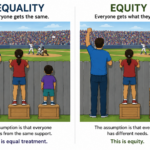
Imagine asking someone who uses a wheelchair to climb stairs, it would be ridiculous to suggest putting a ramp in (because it would make it “easier” for the wheelchair user) would be “unfair” to everyone else. Yet similar arguments are regularly made about autistic people receiving flexible working arrangements, quiet work spaces, additional exam time or disability benefits.
The Equality Act exists because equality isn’t achieved by treating everyone identically. It is achieved by recognising that different people need different forms of support to access the same opportunities.
Autism Doesn’t Switch Off When the Headlines End
You may well know a autistic person and see that they are able to function, reasonably well, in society. You rarely see the:
- Sensory overload after a crowded commute, the hours spent masking to appear “normal.”
- Exhaustion after navigating workplace politics.
- Anxiety caused by unexpected change.
- Increased rates of unemployment despite high levels of ability.
- Fragmented support systems that many autistic people continue to face.
Recent reports from autism organisations and policy experts continue to highlight long diagnostic delays, under-resourced services and significant inequalities across education, healthcare and employment. Parliamentary reviews have also concluded that, despite legal protections, governments have failed to deliver meaningful change for autistic people. (Research in Practice)
That isn’t an easy ride.
The Cost of Ableist Narratives
When newspapers suggest autistic people are exploiting the system, the consequences reach far beyond social media debates. These stories influence public attitudes by:
- Exacerbating the guilt disabled people already feel for asking for support
- Encourage employers to become sceptical of adjustment requests.
- Emboldening strangers to question invisible disabilities.
- Contributing to the hostility many disabled people already experience.
Increased reporting of this type fuels an anti-benefits rhetoric and leads people to be suspicious of disabled people. Seeing these headlines in the media leads strangers to feel it’s their right to harass and publicly question anyone using disability support.
For autistic people, whose disability is often invisible, this scepticism can be especially harmful. Many already spend years wondering whether they’re “autistic enough” to deserve help. Public accusations of “taking advantage” only deepen that self-doubt.
Why Do These Myths Persist?
Part of the problem lies in how society understands disability. People often assume disability must be visible, constant and severe.
Autism doesn’t always fit that expectation. Someone may appear articulate, hold a job or maintain relationships while still experiencing significant sensory processing difficulties, executive functioning challenges, burnout or debilitating anxiety. Because many autistic people have become experts at masking their differences, outsiders mistake survival for ease. If someone appears to be coping, people assume they don’t need support. But appearing fine is not the same as being fine. Masking comes at an enormous psychological cost and has been linked with poorer mental health and autistic burnout.
We Need to Stop Measuring Worthiness
The public conversation often centres on whether someone is “disabled enough.” Are your problems “bad enough” to justify benefits or to force a reasonable adjustment?
This is the wrong question!
Instead, we should ask whether our systems are designed inclusively enough that disabled people can participate fully in society. Support often requires people to repeatedly prove their suffering because the system is attempting to find those trying to de-fraud the system; this only harms those who legitimately need help.
Autism is a permanent disability, while support needs fluctuate, the need for support doesn’t. Many autistic people struggle through lengthy and repeated assessments simply to retain support. Disability campaigners have argued for reforms that recognise lived experience rather than forcing people through degrading or repetitive assessment processes. (The Guardian)
And yet, autistic people are meant to be “grateful” for anything they get!
Changing the Narrative
Ableism often hides behind language about fairness. Is it fair that person X has a quiet place to work? Is it fair that person Y has longer for their exam?
People often focus on ensuring no favouritism is show and forget that the definition of fairness requires no discrimination! It means recognising barriers and removing them. Autistic people are not asking for easier lives. We have some simple requests:

- Accessible education.
- Inclusive workplaces.
- Healthcare professionals who understand autism.
- Benefits systems that recognise genuine need without humiliation.
- Communities that stop confusing support with privilege.
When we replace suspicion with understanding, everyone benefits. Inclusive workplaces retain talented employees. Schools become more effective learning environments. Healthcare becomes more accessible. Society becomes fairer—not because autistic people receive more than everyone else, but because they finally receive what they have always deserved: equal opportunity.
The next time a headline claims autistic people are getting an “easy ride,” it’s worth asking a different question. Who really benefits from that story? Because it certainly isn’t autistic people.
Ableism is often disguised as “common sense,” “fairness,” “consistency,” or “high standards.” And until we challenge these misconceptions, ableism will continue.