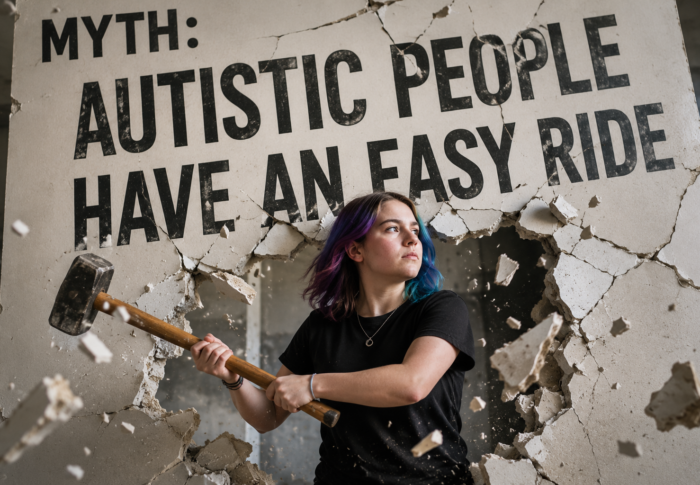

Navigating autism misinformation
Public conversations about autism can be deeply personal. Families, autistic individuals, educators, and healthcare providers are all touched by how society views autism. Unfortunately, when influential figures make misleading claims, the ripple effects can be harmful.
There is a lot of research about what ‘causes’ autism, unfortunately not all research stands up to scrutiny. One such claim is that vaccines are related to autism. Despite there being overwhelming scientific evidence that disproves this claim, it continues to circulate widely, fuelling fear, stigma, and confusion. For families seeking understanding and support, the noise of misinformation can be overwhelming. Despite conflicting with established scientific consensus, a claim has been made that paracetamol, taken while pregnant contributes to autism risk.
In this post, we’ll explore the psychological toll of misinformation, why autism misinformation sticks, and strategies for navigating these false narratives while protecting both your mental health and your connection to reliable resources.
The human cost of misinformation
Autism misinformation is not just an abstract debate. It has real consequences for individuals, families, and communities.
- Stigma and shame: Framing autism as something to “fear” or “avoid” reinforces harmful stereotypes that autistic people are broken or less valuable.
- Guilt: Parents may feel they “caused” their child’s autism, which compounds stress and undermines acceptance.
- Social conflict: Families and friends may clash when misinformation becomes entangled with political identities.
- Vaccine hesitancy: The false link between vaccines and autism has contributed to lower vaccination rates, risking outbreaks of preventable diseases.
- Emotional exhaustion: Constantly navigating conflicting claims can leave families feeling drained, isolated, and uncertain about where to turn.
As a counsellor, I often meet individuals struggling not just with the challenges of autism itself, but with the confusion and stigma spread by misinformation.
Why autism myths are so sticky
Misinformation about autism is not new. But when repeated by public figures with large platforms, it can feel especially convincing. Several psychological dynamics help explain why such myths persist:
- Emotional appeal: Fears about children’s health trigger strong protective instincts. Hearing bold claims triggers a fear response even when it’s not true.
- Repetition: Hearing the same myth repeatedly (even in the context of debunking it) can create a false sense of familiarity and credibility.
- Confirmation bias: People naturally look for explanations that fit their worries or lived experiences. For a parent noticing early developmental differences in their child, it can feel easier to latch onto a single “cause” than to face the complexity of autism. One of the most basic principles in statistical analysis is that correlation doesn’t necessarily mean causation and yet it is easy to overlook this.
- Distrust of institutions: Some political leaders actively sow doubt about medical and scientific communities. This makes it hard to know who to believe.
These factors combine to keep myths about autism alive long after science has put them to rest.
Grounding yourself in reliable truths
Here are some key facts that can help counterbalance the swirl of misinformation:
- Autism is a neurodevelopmental difference, not a disease to be cured.
- The causes of autism are complex and include genetic and environmental factors. Numerous large-scale, peer-reviewed studies have confirmed there is not link between vaccines and autism and that paracetamol is safe to take during pregnancy.
- Autistic individuals bring diverse strengths and perspectives. Autism isn’t a tragedy, seeing it this way ignores resilience, creativity, and community.
- Early support and acceptance make a significant difference in quality of life. It’s this we should be focusing on, not blame and scaremongering.
Holding onto these truths can provide a sense of stability when misleading claims are amplified in public discourse.
Strategies for navigating any misinformation
1. Strengthen your boundaries
Boundaries are helpful for keeping us safe, this can be physically or emotionally. If you read something on social media that sets off alarm bells, you don’t have to respond to it! It can help to take a step back, strengthen your boundaries and react in a considered way. Perhaps, this time, it’s ok to roll your eyes and move on; another time, you may choose to discuss it with a trusted friend; on another occasion, you may feel you want to be part of the public discussion. There is no right or wrong but it’s important to look after your emotional health.
2. Fact-check with trusted sources
When you hear a claim, pause and think:
- Who is saying this? Is it an organisation or an individual, are multiple agencies/people saying the same thing? Trusted agencies such as the National Autistic Society have a proven track record and will back up their claims with research.
- What is their agenda? When broken down, is this person trying gain financially? Trying to gain votes? Attempting to cause controversy? Are they trying to advocate for autistic people or is their message ‘autism is bad’?
- Where is the evidence? Ultimately, peer reviewed medical research is the most robust evidence. For example, a study published in peer-reviewed JAMA, found no link between paracetamol taken during pregnancy and neurodevelopmental disorders, autism, ADHD or learning disabilities. If something is an opinion or based on personal experience, this is valuable, but it cannot be treated as scientific fact.
3. Reframe the narrative
Instead of focusing on harmful myths, emphasize empowering truths. For example:
- You might hear “autism is caused by vaccines”, reframe this as “autism is part of natural human diversity.”
- Instead of “autism is something to fear”, try “autism comes with both challenges and strengths.”
- When someone says “how can we cure autism?”, consider “how can society better embrace autistic people and support them to live fulfilling lives?”
4. Protect relationships

When misinformation creates conflict with family or friends, lead with empathy rather than argument. Instead of debating, find common ground, share personal stories, listen actively, and introduce reliable resources gently.
5. Care for your emotional health
Being bombarded with false claims about autism can feel invalidating. Practice grounding techniques—like mindfulness, journaling, or setting boundaries with media—to protect your peace of mind. Connect with people who share your desire for accurate messages and information.
When to seek professional support
Whether you’re touched by neurodivergence personally or recognise it in a loved one, feelings of confusion or shame may be surfaced by misinformation and the messages that are currently being spread about autism.
It may be helpful to focus on the following:
- Processing the emotions stirred up by harmful myths
- Building resilience against shame or blame
- Developing communication strategies for difficult conversations
- Learn to foster a attitude of acceptance
You don’t have to carry the weight of misinformation alone, if you think it would be helpful to talk to a neurodiversity-affirming counsellor, please reach out to Reflexity Counselling.
Closing reflections
Misinformation about autism, whether amplified by political figures or circulating in everyday conversations, can feel overwhelming. But you are not powerless. By grounding yourself in evidence, nurturing emotional resilience, and connecting with supportive communities, you can protect yourself and your loved ones from the harm misinformation causes.
Autism is not a tragedy. The real tragedy lies in how myths and stigma isolate families and overshadow the strengths of autistic individuals. By rejecting misinformation and embracing truth, we open space for compassion, acceptance, and hope.